
What Is HRM? Why Every Organisation Needs It
Human Resource Management (HRM) is the systematic management of an organisation’s people, covering workforce planning, recruitment, development, performance reviews, compensation, benefits and offboarding. It helps employees reach their full potential and supports organisational growth. HRM is essential because people are an organisation’s most valuable resource. Effective people management enables the organisation to move forward efficiently.
What Is HRM?
Human Resource Management (HRM) involves managing an organisation’s people through strategies and processes that cover every aspect of employment. Its aim is to help employees perform their roles as effectively as possible, enabling the organisation to grow and succeed.
Learn more about the basics at >>
What Are the Responsibilities of HRM?
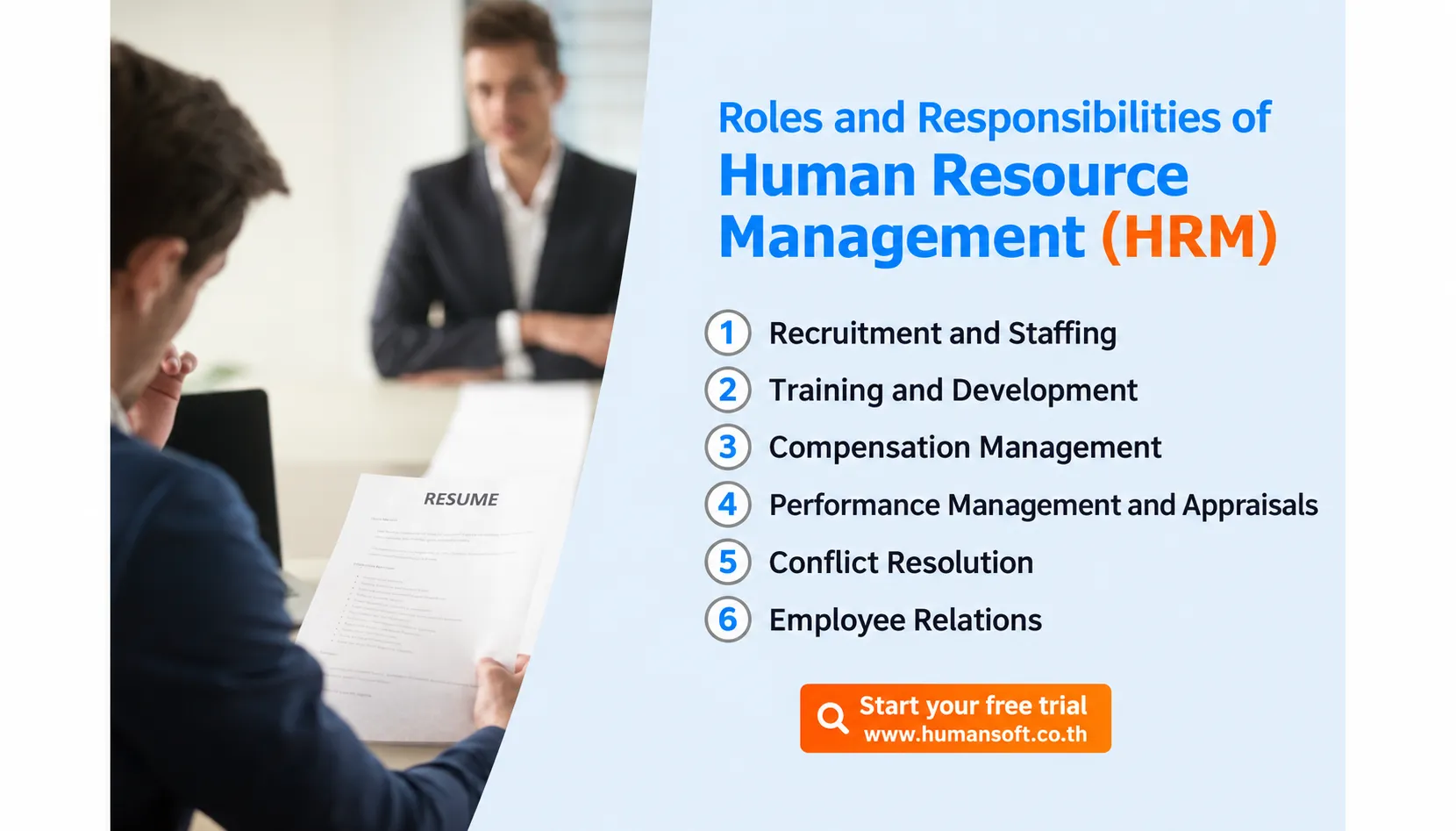
HRM has seven main responsibilities: recruitment, employee development, compensation and payroll management, performance reviews, conflict resolution, employee relations, and employee benefits and rights.
1. Recruitment and Staffing
This starts with workforce planning and identifying staffing gaps, followed by recruiting people who are a good fit for the organisation. Selection strategies match people to roles, while assessments of employee potential help the organisation operate at full capacity.
Receive online job applications and manage candidates in one system >>
2. Training and Development
Management practices continually evolve. Employees who can adapt help the organisation keep moving forward. HR therefore needs to provide and new job-related knowledge, as well as management skills such as teamwork and leadership.
3. Compensation and Payroll
This involves more than paying salaries on time. It includes maintaining accurate payroll, managing budgets, setting salary levels for each position and handling other employee-related financial matters, such as social security, severance pay and tax. Most organisations now use technology to support payroll.
Use approved attendance, overtime and leave data to calculate payroll, deduct withholding tax and social security contributions under Thai law, and generate payslips that employees can view through the app with
4. Appraisals and Performance Management
After employees join, HR must monitor whether their performance meets organisational expectations and identify areas for improvement or development. This helps strengthen organisational capabilities. Learn how to set performance indicators at
5. Conflict Resolution
Workplace conflict is normal because employees have different backgrounds, cultures and education. HR helps resolve and prevent that may arise in the future.
6. Employee Relations
HR builds positive relationships and teamwork so employees can work well together. It also supports coordination within and outside the organisation. Poor working relationships can harm the organisation.
7. Employee Benefits and Services
HR provides support such as health insurance and emergency loans, and manages employees’ leave entitlements. Learn more at
How Does HRM Differ from HR and HRD?
HR usually refers to the department or people who handle human resources. HRM covers overall people management throughout the employee lifecycle. Human Resource Development (HRD) is part of HRM and focuses on developing employee capabilities.
| Aspect | HR | HRM | HRD |
|---|---|---|---|
| Meaning | Human resources / HR department | Human Resource Management | Human Resource Development |
| Scope | The department or people responsible for HR work | The full employee lifecycle, from recruitment to offboarding | Training, skills development and career development |
| Goal | Manage day-to-day HR operations | Help people reach their full potential and support organisational growth | Improve employee capabilities and readiness for change |
| Relationship | — | Includes HRD | Part of HRM |
HRD focuses on improving employee capabilities and effectiveness. It tracks whether performance meets organisational expectations and develops employees to keep pace with changing trends.
Tips! Read more at >>
Summary: Why HRM Matters to Organisations
HRM manages people throughout the employee lifecycle, from joining to leaving, to support smooth operations and prevent complaints. It covers payroll, rewards, development and motivation. Employees are an organisation’s most valuable resource and drive its progress in today’s business environment. The better an organisation manages its people, the more successful it can become.
If your organisation’s HRM work is spread across multiple Excel files, HumanSoft brings recruitment, attendance, payroll and performance reviews together in one system. View or
FAQ: Frequently Asked Questions About HRM
Q : What does HRM stand for?
A : HRM stands for Human Resource Management. It refers to the systematic management of an organisation’s people.
Q : Do small businesses (SMEs) need HRM?
A : Yes. Even without a dedicated HR department, owners or managers already carry out HRM tasks such as recruitment, payroll, social security reporting and managing leave entitlements. Clear processes help reduce errors and disputes.
Q : How does an HRM system differ from payroll software?
A : Payroll software focuses on calculating salaries, tax and social security contributions. An HRM system also covers other HR activities, such as recruitment, attendance, leave and performance reviews. Many systems, including HumanSoft, combine both.
