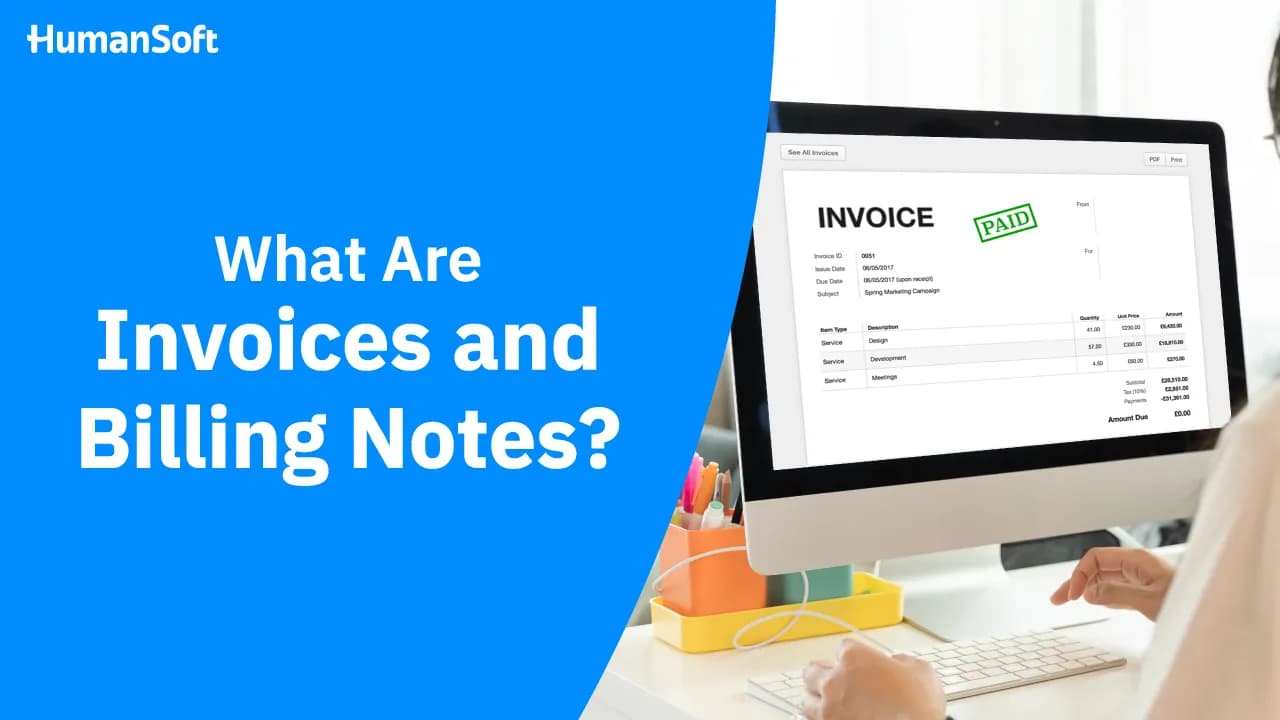
What Is the Difference Between an Invoice and a Billing Note?
An invoice lists the goods or services provided and the amount a customer must pay, while a billing note states the amount due according to a billing cycle or schedule. Some businesses may use both documents, depending on their agreement and workflow.
Table of Contents:
- What Is the Difference Between an Invoice and a Billing Note?
- What Are an Invoice and a Billing Note?
- How Do an Invoice and a Billing Note Differ?
- Differences Between an Invoice and a Billing Note
- What Information Should an Invoice and Billing Note Include?
- How to Issue an Invoice and Billing Note
- Summary: What Are an Invoice and a Billing Note, and How Do They Differ?
- Frequently Asked Questions About Invoices and Billing Notes
What Are an Invoice and a Billing Note?
An invoice and a billing note are important financial documents used to notify customers of amounts due for goods or services. These documents are commonly used by businesses that offer credit terms or by wholesalers delivering large orders. Without an invoice or billing note, customers may find it difficult to request expense reimbursement.
“Invoices” and “billing notes” are important tools for financial and business management. Sellers and customers can use these documents to maintain clear transaction records and evidence for verifying payments later.
How Do an Invoice and a Billing Note Differ?
Invoices and billing notes are financial documents used in business and collection processes. Although their use and characteristics may vary, the key differences are as follows:
Invoice
Used to notify customers of goods or services provided, the amount due, and the payment deadline. It is generally issued after a sale or service is provided, according to the business terms.
Billing Note
Used to notify customers of the amount due according to a billing cycle or commercial agreement. It may show the total amount payable for that cycle.
Differences Between an Invoice and a Billing Note
| Topic | Invoice | Billing Note |
| Purpose | Lists items and amounts due | States the amount due for a billing cycle |
| When Used | When goods are sold or services are provided | When the scheduled billing cycle arrives |
| Key Information | Goods/services and amounts | Total amount due |
| Issued By | Seller or service provider | Seller or service provider |
| Usage | May be used alone or with a billing note | May be used alone or with an invoice |
*Information as of September 2026
What Information Should an Invoice and Billing Note Include?
Invoice and billing note formats vary by organization, but these documents should contain two key sections: the business’s information (the issuer of the invoice/billing note) and the customer’s information (the recipient). The details are as follows:
Business Information (Invoice/Billing Note Issuer)
- Company name and address
- Company phone and fax numbers
- Tax identification number
- Document issue date
- Invoice number
- Signature of the document issuer
Customer Information (Invoice/Billing Note Recipient)
- Company name and address
- Tax identification number
- Signature of the document recipient
- Details of goods or services
- Total amount due
- Payment due date
How to Issue an Invoice and Billing Note

1. Check the Billing Cycle
Check with the accounting team of the business partner or customer regarding the invoice issuance schedule, billing cycle, and the company’s check collection date.
2. Prepare the Documents
Prepare one set of documents for issuing the invoice or billing note, consisting of an original and a copy. If there is a quotation or purchase order, attach it to the invoice/billing note.
3. Send the Documents to the Customer
Deliver the invoice or billing note to the customer. The recipient must sign to confirm receipt. The customer retains the original invoice/billing note, while the issuer keeps the copy as evidence.
4. Proceed After Receiving Payment
After receiving a check or payment as agreed, the business should prepare a tax invoice or receipt to provide to the customer.
Summary: What Are an Invoice and a Billing Note, and How Do They Differ?
An invoice lists the goods or services provided and the amount the customer must pay, while a billing note states the amount due according to a billing cycle or schedule. A business may use either document alone or both together, depending on its workflow and agreement with the customer.
Frequently Asked Questions About Invoices and Billing Notes
Can an invoice be canceled?
It can be canceled according to the business’s procedures, but the accounting and tax implications should be reviewed first.
What should you do if a customer’s payment does not match the invoice amount?
Compare the amount received with the sales documents and contact the relevant parties to identify the reason for the discrepancy before recording the payment.
Can a billing note include multiple invoices?
Yes, if the company’s billing process and agreement with the customer allow it. Each included invoice should be clearly listed for verification.
Read More Related Articles