

What Should HR Do When an Employee Retires?
Retirement marks the end of employment under company policies or labor law. Employers must pay severance based on an employee’s length of service and properly manage related documents, payroll, and tax information.
Table of Contents:
- What Should HR Do When an Employee Retires?
- Q: What Should HR Do When an Employee Retires Under Thai Labor Law?
- A: Because retirement is treated as termination of employment, HR must determine the severance pay owed to retiring employees. There are two situations to consider:
- Retirement Severance Pay Under Section 118 of the Labor Protection Act
- Labor Protection Laws Related to Retirement
- Summary: What Should HR Do When an Employee Retires?
- FAQ: Frequently Asked Questions About Employee Retirement
Q: What Should HR Do When an Employee Retires Under Thai Labor Law?
In Thailand, retirement means the termination of an employment contract when an employee reaches the age agreed upon with the employer or specified by the employer. Retirement is considered a form of termination under the Labor Protection Act. The retirement age may vary depending on the terms agreed upon with the employer.
In much of the private sector, there may be no fixed retirement age (although some companies do set one), allowing employees to continue working as long as they are able. Some employers assume that without a specified retirement age, they do not have to pay severance. However, medium-sized and large businesses often have employment contracts, and many set retirement at age 55. So what should HR do?
A: Because retirement is treated as termination of employment, HR must determine the severance pay owed to retiring employees. There are two situations to consider:
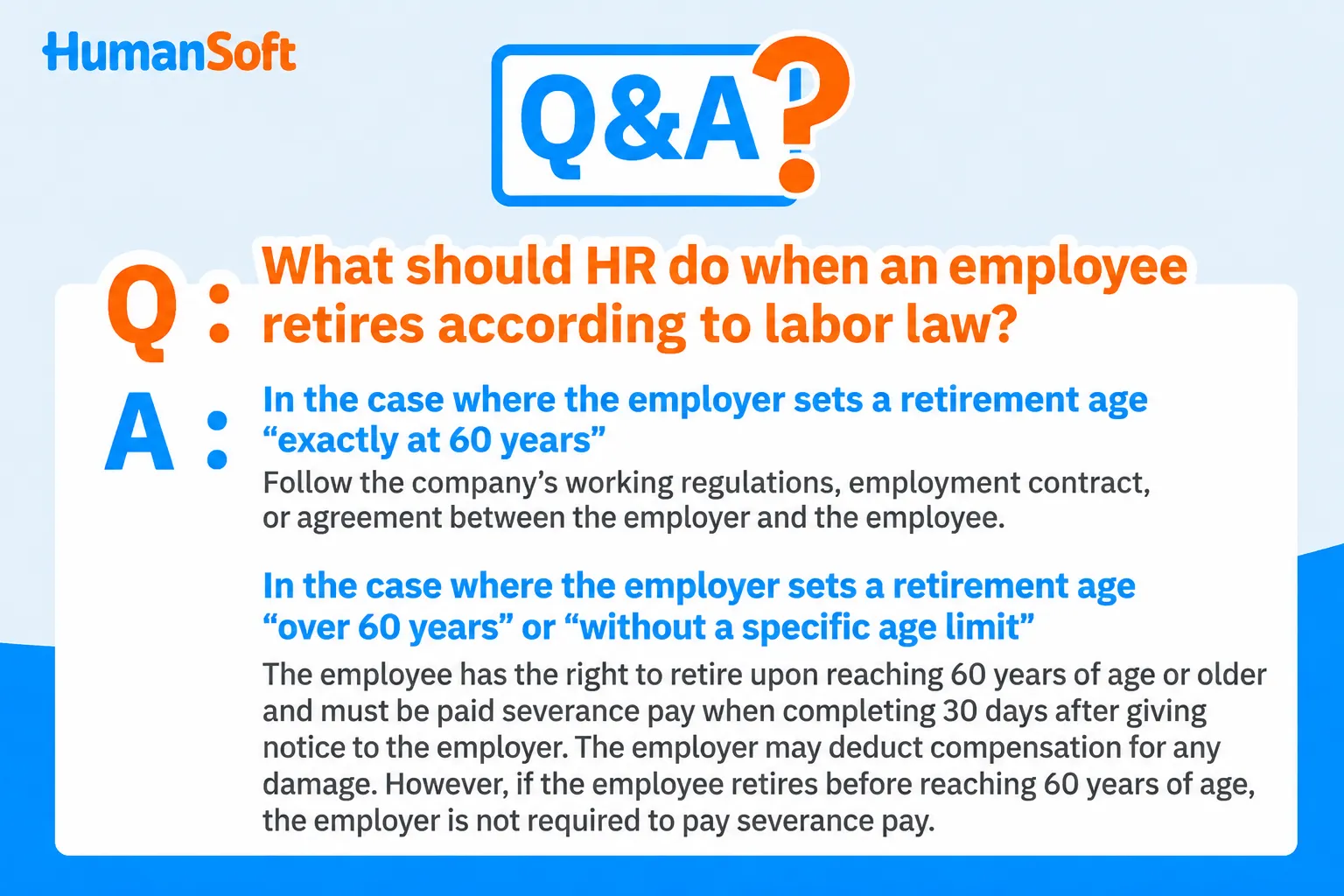
When the Employer Sets the Retirement Age Below 60
Retirement follows the company’s work rules, employment contract, or agreement between the employer and employee.
When the Retirement Age Is Set Above 60 or Is Not Specified
Employees aged 60 or older have the right to declare their intention to retire. Retirement takes effect 30 days after the employer is notified, and the employer must pay severance. However, if an employee retires before turning 60 outside the applicable retirement arrangement, the employer is not required to pay severance for that early retirement.
Retirement Severance Pay Under Section 118 of the Labor Protection Act
| Length of Service | Severance Pay Entitlement |
| At least 120 days but less than 1 year | 30 days of wages (1 month) |
| At least 1 year but less than 3 years | 90 days of wages (3 months) |
| At least 3 years but less than 6 years | 180 days of wages (6 months) |
| At least 6 years but less than 10 years | 240 days of wages (8 months) |
| At least 10 years but less than 20 years | 300 days of wages (10 months) |
| 20 years or more | 400 days of wages (approximately 13.33 months) |
*Information as of September 2026
Note: Severance pay is calculated using the employee’s final wage rate in accordance with Section 118 of the Labor Protection Act. Employers should check the latest applicable labor laws and requirements before using this information in practice.
Labor Protection Laws Related to Retirement
Section 118/1 addresses retirement and severance pay as follows:
- Section 118/1: Retirement agreed upon between the employer and employee, or specified by the employer, is deemed termination of employment under Section 118, paragraph two.
- If no retirement age has been agreed upon or specified, or if the retirement age is set above 60, an employee aged 60 or older may notify the employer of their intention to retire. Retirement takes effect 30 days after the notification, and the employer must pay severance under Section 118, paragraph one.
- Section 144: An employer who violates or fails to comply with these provisions may face imprisonment of up to six months, a fine of up to THB 100,000, or both.
Summary: What Should HR Do When an Employee Retires?
Whether an employee retires before or after age 60, retirement planning should begin in advance to help ensure sufficient savings and financial security throughout retirement.
FAQ: Frequently Asked Questions About Employee Retirement
Q: Can a company set its own retirement age?
A: Yes. A company may specify a retirement age in its work rules or employment agreements. The policy should be clearly documented and communicated to employees.
Q: What if a company has not specified a retirement age?
A: The company should review the applicable labor law provisions and follow the relevant legal requirements.
Q: When should HR start preparing for an employee’s retirement?
A: HR should prepare in advance to allow enough time to verify the employee’s length of service, calculate entitlements, and organize the necessary documents.
Related Articles:
- What HR Should Know: Employers Cannot Force Employees to Work Overtime Under Labor Law
- Q&A: Is It Illegal to Work Overtime Without Receiving Overtime Pay?
- Thai Labor Law Updates for 2023: What HR Needs to Know
- What HR Should Know: How Many Days of Ordination Leave Are Employees Entitled To Under Labor Law?


