
What Is an Overtime Schedule Form? Types and Free Download
An overtime schedule form is a document used to record employees’ overtime requests and approvals. It provides employers and HR with proper evidence of overtime work in compliance with labour law, helps prevent overtime pay disputes, and serves as a data source for payroll calculations.
Why Is an Overtime Schedule Form Important for Employees and HR?
In addition to serving as evidence of an employee’s overtime work, an overtime schedule form is also an important HR document. Here is how it benefits both employees and HR.
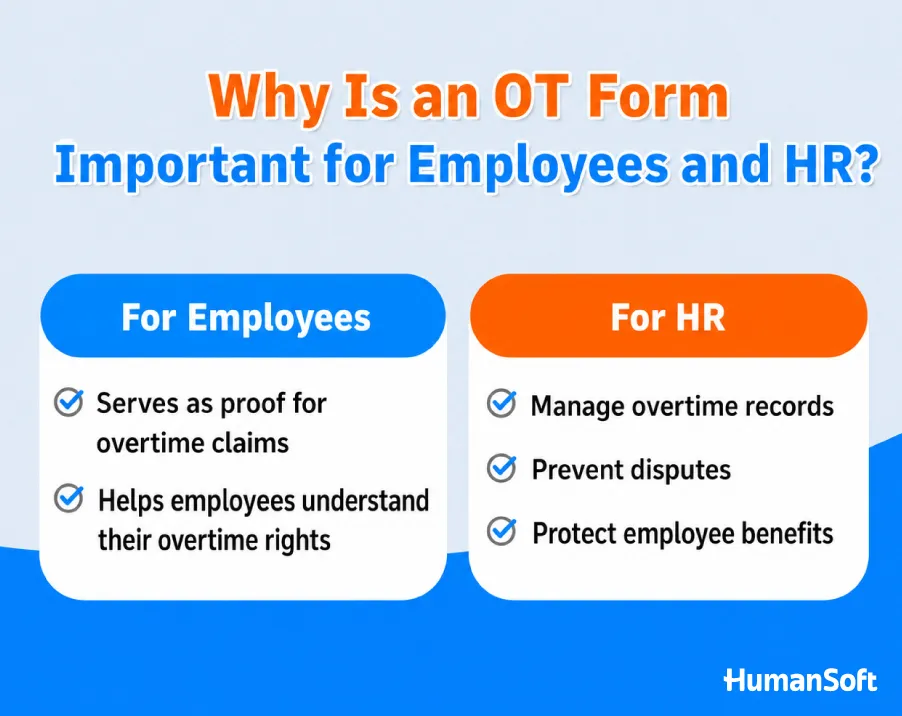
For Employees
- Evidence for claiming overtime pay: Employees can use the overtime schedule form as supporting evidence when claiming overtime pay from the organisation.
- Helps employees understand their overtime rights and responsibilities: Employees can also review their overtime entitlements, such as the applicable overtime rate and the number of overtime hours worked.
For HR
- Manage overtime data: The form helps HR record employees’ overtime information accurately and completely. HR can also track overtime by individual employee or across the organisation and use the data for workforce planning and analysis.
- Prevent disputes: An overtime schedule form is important evidence that an employee actually worked during the stated period. It can help prevent disputes between the organisation and employees over overtime pay and reduce the likelihood of workplace conflict.
- Protect employee entitlements: HR can use the form to protect employee entitlements and ensure that overtime compensation is appropriate, accurate, complete, and paid on time. Employees can also review details such as overtime rates and total overtime hours.
How Many Types of Overtime Schedule Forms Are There, and How Do They Differ?
There is no fixed classification for overtime schedule forms because each organisation may adapt them to its own needs. For practical use, they are generally divided into three main types:
| Type | Best Suited For | Information Included |
|---|---|---|
| General Form | All organisations | Name, date, time period, reason, and approval signature |
| Individual Form | Employees who work overtime at different times | Individual employee details and daily overtime hours |
| Group Form | Teams working overtime together | Employee list, time period, and team leader’s signature |
General Form (for occasional overtime)
Used for general situations, such as when an employee requests overtime to close sales, prepare meeting documents, or complete other occasional tasks.
Individual Form (for regular overtime)
Used for employees who regularly need to work overtime.
Group Form (for team-based overtime)
Used for groups of employees who need to work overtime at the same time, such as a large project team.
Sample Overtime Schedule Form: What Information Should It Include?
| Category | Required Information |
|---|---|
| Employee Information | Full name, employee ID, department, and position |
| Overtime Details | Date, start and end times, number of hours, and reason |
| Approval | Employee, supervisor, and HR signatures |
| Calculation | Overtime rate and overtime pay (calculated manually or by the system) |
After completing the overtime schedule, remember to calculate overtime pay correctly in accordance with the law before processing payroll.
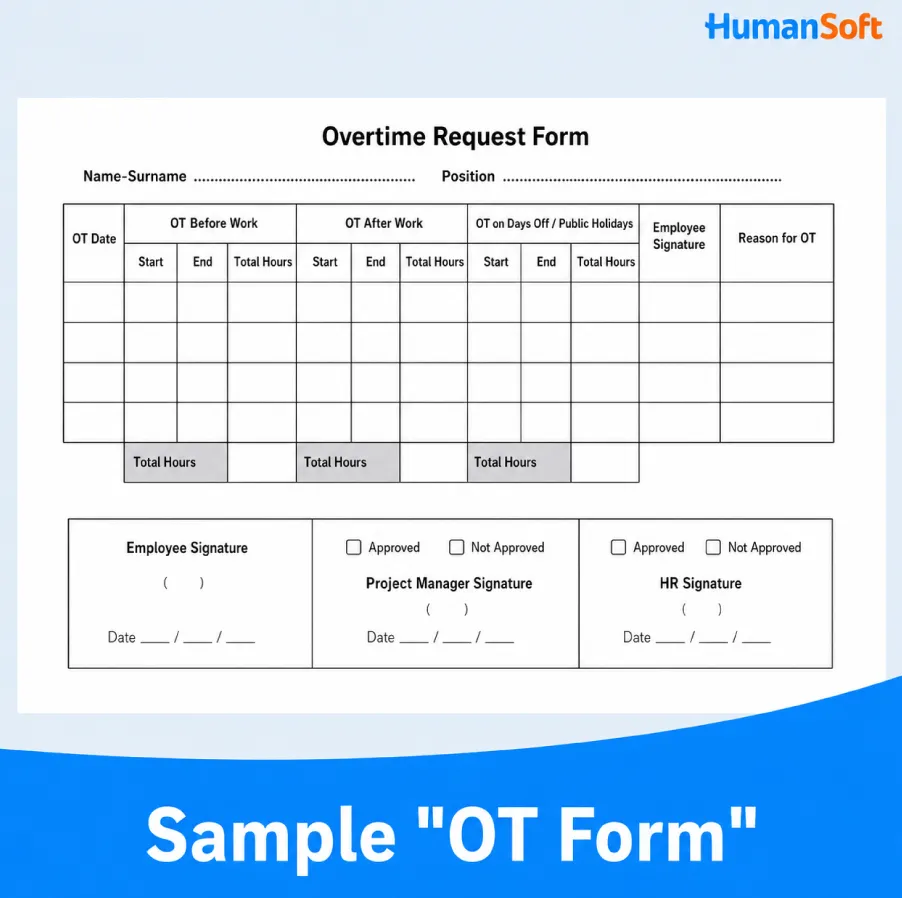
Tips!! Download a sample overtime schedule form >> Overtime (OT) Approval Request Form
Summary: What Should an Overtime Schedule Form Include?
In summary, an overtime schedule form, or overtime approval request form, is a document employees use to record requests to work overtime in specific situations and time periods. It is also an important HR tool for managing data, preventing disputes, protecting employee entitlements, and promoting transparent and fair workforce administration.
FAQ: Frequently Asked Questions About Overtime Schedule Forms
Q: What should an overtime schedule form include?
Q: Where can I download an overtime schedule form?
Q: How long should HR retain overtime schedule forms?
Q: What is the difference between paper forms and a digital system?
Q: Which overtime form should hourly-paid employees use?
Read More Related Articles