
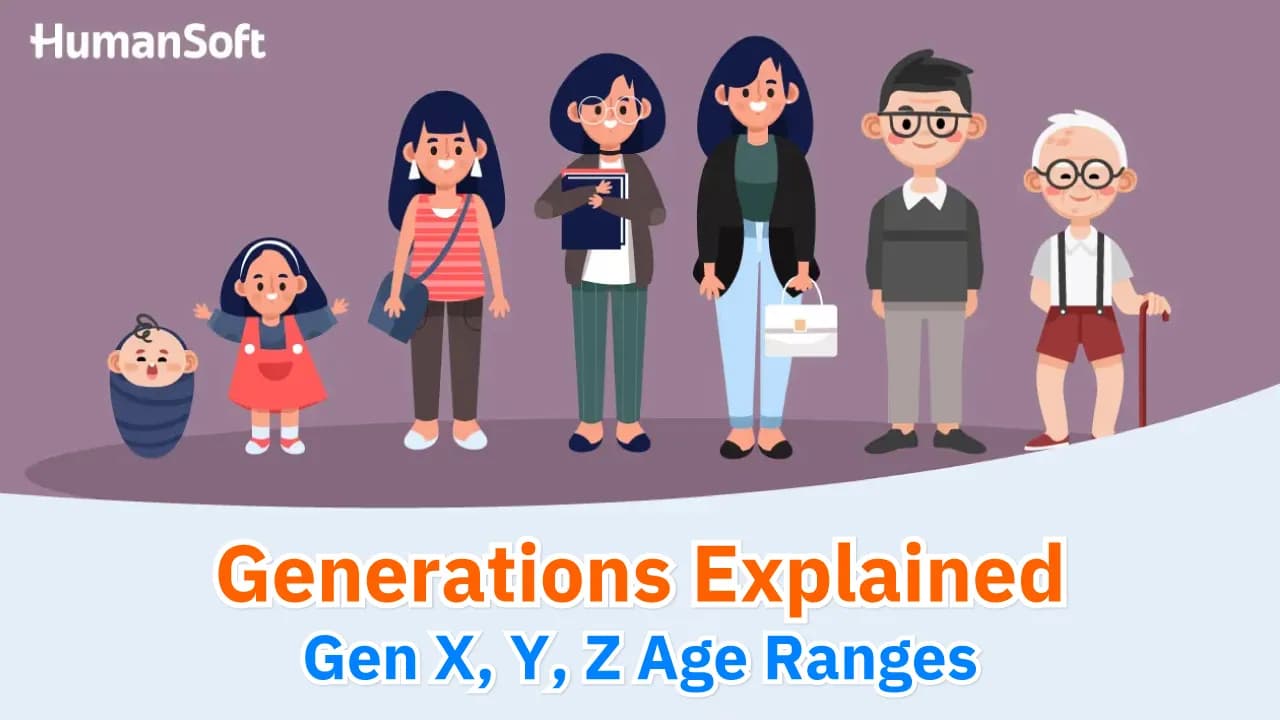
What Generations Are There? Latest Gen X, Y, and Z Age Ranges
Generations can be divided into eight groups by birth year. In 2026, Gen X is 46–61 years old (born 1965–1980), Gen Y is 30–45 (born 1981–1996), and Gen Z is 14–29 (born 1997–2012).
Table of Contents:
- What Generations Are There? Latest Gen X, Y, and Z Age Ranges
- What Is a Generation?
- What Years Was Each Generation Born, and How Old Are They in 2026?
- What Are the Key Characteristics of Each Generation?
- Summary: What Generations Are There? Latest Gen X, Y, and Z Age Ranges
- FAQ: Frequently Asked Questions About Generations
What Is a Generation?
A generation is a group of people born within a similar period, usually around 15–20 years, who grow up experiencing similar events, technologies, and social conditions. As a result, they often share similar attitudes and lifestyles. Generational groupings are not based on age alone. They also reflect social change across different eras, which is why they are widely used in research, marketing, and HR to understand differences among age groups.
What Years Was Each Generation Born, and How Old Are They in 2026?
In 2026, most working-age people are Gen X (46–61), Gen Y (30–45), and Gen Z (14–29), while Baby Boomers are 62–80 years old. See all eight generations in the table below.
| Gen | Birth Years (CE) | Birth Years (B.E.) | Age in 2026 | Key Influences |
|---|---|---|---|---|
| Greatest | 1901–1927 | 2444–2470 | 99 and older | Two World Wars, the Great Depression |
| Silent | 1928–1945 | 2471–2488 | 81–98 | World War II and postwar recovery |
| Baby Boomers | 1946–1964 | 2489–2507 | 62–80 | Rapid postwar economic growth |
| Gen X | 1965–1980 | 2508–2523 | 46–61 | Transition into the computer age |
| Gen Y (Millennials) | 1981–1996 | 2524–2539 | 30–45 | The early internet era |
| Gen Z | 1997–2012 | 2540–2555 | 14–29 | Smartphones and social media |
| Gen Alpha | 2013–2024 | 2556–2567 | 2–13 | AI and smart devices |
| Gen Beta | 2025–2039 | 2568–2582 | 0–1 | AI in everyday life |
*Ages in the table are calculated using 2026 minus the birth year. If a person has not yet had their birthday this year, their actual age will be one year lower than the number shown.
What Are the Key Characteristics of Each Generation?
Each generation has distinctive characteristics shaped by the events and technologies they grew up with. Here is a summary:
Greatest Generation: The Generation Shaped by War
They lived through World War I, the Great Depression, and World War II. These hardships helped shape a generation known for resilience, discipline, and a strong sense of collective responsibility.
- Resilient and highly disciplined
- Community-minded and focused on the collective good
Silent Generation: The Postwar Generation
Born during and just after World War II, this generation grew up in a period when the world was seeking stability, peace, and reconstruction.
- Value stability and tradition
- Respect rules and hierarchy
Baby Boomers: The Generation That Built the Postwar Economy
After the war, economies expanded rapidly and birth rates surged, creating the “Baby Boom.” This generation grew up alongside industrial development and urban expansion.
- Highly dedicated to work and often measure success through position and achievement
- Set long-term goals
- Value job security
Gen X: Flexible and Adaptable
Gen X grew up before technology became central to everyday life and witnessed the transition from landline phones to smartphones, making them a bridge between older and younger generations.
- Flexible and adaptable
- Independent and comfortable working autonomously
- Often loyal to their organizations
Gen Y (Millennials): The Generation That Changed the Way We Work
Millennials grew up with the early internet, email, social media, and smartphones. Comfortable with digital life from a young age, they also began questioning the traditional 9-to-5 work model.
- Place importance on Work-Life Balance
- Prefer flexibility and are open to newer work arrangements such asfreelance work
- Comfortable using technology
- Want work that feels personally meaningful
Gen Z: Digital Natives
Gen Z grew up with smartphones, high-speed internet, and social media platforms such as TikTok, Instagram, and YouTube, which is why they are often called Digital Natives. Today, the earliest Gen Z members of Gen Z have already entered the workforce.
- Open to diversity
- Learn independently through online channels
- More willing to start businesses at a young age
- Care about social and environmental issues
Gen Alpha: Growing Up with AI
Gen Alpha is growing up in a world of AI, IoT, and smart devices, with many learning to use touchscreens from a very young age.
- Familiar with AI and voice assistants
- Strong sense of individuality
- Learn through video and interactive media
Gen Beta: The Generation of the Future
People born from 2025 onward are expected to grow up with AI deeply embedded in everyday life, including education, work, and the services they use.
Summary: What Generations Are There? Latest Gen X, Y, and Z Age Ranges
There are eight generations, from the oldest to the youngest: Greatest, Silent, Baby Boomers, Gen X, Gen Y, Gen Z, Gen Alpha, and Gen Beta. In 2026, Gen X is 46–61 years old (born 1965–1980), Gen Y is 30–45 (born 1981–1996), and Gen Z is 14–29 (born 1997–2012). Understanding generational differences can help HR tailor communication and employee benefits more effectively.
FAQ: Frequently Asked Questions About Generations
Q: Who are Xennials?
A: Xennials are people born around the transition between Gen X and Gen Y, roughly from 1977 to 1983. They grew up across both the analog and digital eras, so they often show characteristics of both generations.
Q: Who are Zillennials?
A: Zillennials are people born around the transition between Gen Y and Gen Z, roughly from 1993 to 1998. They can remember life before smartphones but entered the workforce in the full social-media era.
Q: Why Are Gen Alpha and Gen Beta Named After Greek Letters?
A: Because generational naming had reached the end of the Latin alphabet at Z, researchers began a new sequence using the first two Greek letters, Alpha (α) and Beta (β), to signal the beginning of a new era.
Related Articles You May Be Interested In
