How Can Organizations Manage Gen Z Employees and Reduce Turnover in 2026?
To reduce turnover among Gen Z employees, organizations should ensure that employees clearly understand their responsibilities, how their performance will be measured, what growth opportunities are available, when they will receive feedback, and how they can work without sacrificing their work-life balance.
Organizations should also develop managers who can communicate effectively and genuinely support their teams.
What Do Gen Z Employees Want from Work in 2026?
Every Gen Z employee has different needs. Their motivation depends on factors such as their position, income, life stage, and individual personality. However, there are several common workplace expectations that employers should pay attention to.
Career and Financial Stability
Gen Z employees want clear information about:
- Salary structures and salary review cycles
- Bonus or incentive criteria
- Employee benefits
- Probation requirements
- Business direction and the stability of their position
Clear communication about compensation and employment conditions helps reduce uncertainty and enables employees to make informed decisions about their careers.
Skill Development and Career Growth
Growth opportunities may include:
- A management career path
- A specialist career path
- Internal job mobility
- Cross-functional projects
- Training and opportunities to learn new skills
Career growth should not be limited to promotion into a management position. Some employees may prefer to become specialists or develop expertise in a particular area.
Genuine Work-Life Balance
Organizations can support work-life balance by:
- Offering appropriate flexibility in working hours and location
- Respecting employees’ personal time and avoiding unnecessary contact outside working hours
- Supporting physical and mental well-being through suitable employee benefits
Work-life balance should be reflected in actual workplace practices, not only in company policies or recruitment messages.
Meaningful Work with Visible Results
Employees should understand:
- Why their work is important
- Who benefits from their work
- How their work contributes to team goals
- How success will be measured
- Which decisions they are authorized to make
When employees understand the purpose and impact of their work, they are more likely to feel engaged and take ownership of the outcome.
Feedback and Recognition
Effective feedback should explain:
- What the employee is doing well
- Which behaviors or results should be improved
- What impact the employee’s work has created
- What the next steps should be
- How the manager will provide support
Feedback should be specific, constructive, and focused on helping employees improve.
Why Do Gen Z Employees Decide to Resign?
Employee resignation is rarely caused by a single issue. Organizations should review actual employee data and workplace conditions rather than relying on assumptions about an entire generation.
Common reasons may include:
- Unclear responsibilities and expectations
- A lack of visible career opportunities
- Receiving feedback only when something goes wrong
- An imbalance between compensation and workload
- Managers who do not lead their teams effectively
- A gap between the company’s stated culture and employees’ actual experiences
- A lack of opportunities for employees to express their opinions
These factors can gradually reduce employee engagement and confidence in the organization.
How Can Organizations Manage Gen Z Employees and Encourage Them to Stay Longer?
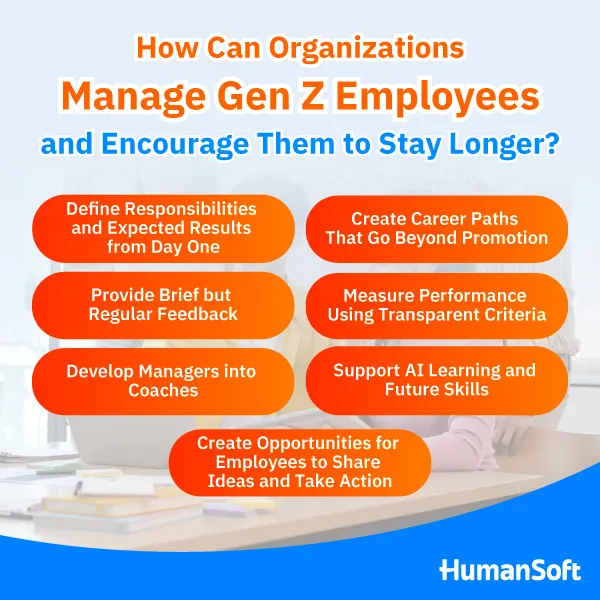
1. Define Responsibilities and Expected Results from Day One
Organizations should clearly communicate:
- Regular responsibilities
- Probation goals
- Performance indicators
- Approval authority
- Tasks and decisions employees can manage independently
A structured onboarding plan helps reduce uncertainty and shows employees that the organization is prepared to support their first days at work.
2. Create Career Paths That Go Beyond Promotion
Organizations should clearly define what is required at each career level, including:
- Required skills
- Expected performance level
- Increased responsibilities
- Changes in compensation
- Approximate time required to progress
Career paths may include both management and specialist tracks. This gives employees more than one way to grow within the organization.
3. Provide Brief but Regular Feedback
Instead of waiting for the annual performance review, managers should conduct regular one-on-one meetings or check-ins.
These conversations should focus on solving problems and improving performance rather than taking place only when an employee has made a mistake.
4. Measure Performance Using Transparent Criteria
KPIs and evaluation criteria should be connected to responsibilities that employees can reasonably control.
Organizations should not change evaluation criteria in the middle of a review period without communicating the change. Performance should also not be evaluated primarily according to a manager’s personal feelings.
5. Develop Managers into Coaches
Managers should be able to:
- Delegate work effectively
- Provide constructive feedback
- Resolve conflict
- Discuss employee development
Technical expertise alone does not necessarily make someone an effective manager. Organizations should also develop their managers’ communication, coaching, and people-management skills.
6. Support AI Learning and Future Skills
Gen Z employees may see AI as both an opportunity and a source of uncertainty.
Employers should establish clear guidelines for using AI and provide training on:
- AI tools
- Information verification
- Data security
- Responsible and ethical use of AI
This helps employees use new technology productively while understanding the risks and responsibilities involved.
7. Create Opportunities for Employees to Share Ideas and Take Action
Listening to employees should go beyond conducting surveys.
When an organization asks for feedback, it should communicate:
- What feedback was received
- Which issues will be addressed
- Who will be responsible
- When employees can expect to see progress
- Which suggestions cannot currently be implemented and why
This demonstrates that employee feedback is being taken seriously.
What Should Employers Do to Retain Gen Z Employees in the Long Term?
| What Employees Want | What Organizations Should Do | What Organizations Should Avoid |
| Stability | Clearly communicate business direction and employment conditions | Creating anxiety without providing information |
| Growth | Provide clear career paths and skill-development plans | Promising “growth opportunities” without defining the criteria |
| Feedback | Provide regular feedback and hold ongoing conversations | Conducting evaluations only at year-end or when an employee makes a mistake |
| Flexibility | Design flexible work arrangements according to the nature of each role | Applying different policies without a clear reason |
| Work-Life Balance | Manage workloads and define appropriate communication hours | Expecting employees to respond to work at all times |
| Meaningful Work | Connect individual responsibilities with organizational results | Assigning work without explaining its purpose |
Summary: How to Manage Gen Z Employees and Reduce Turnover in 2026
Managing Gen Z employees and encouraging them to stay longer requires clarity, fairness, and genuine opportunities for growth.
Employers should:
- Define responsibilities and performance indicators clearly
- Provide regular feedback
- Create multiple career-development paths
- Develop managers’ people-management skills
- Ensure that workloads are appropriate for the compensation provided
In 2026, Gen Z employees are not simply looking for rapid promotions. They also value stability, skill development, work-life balance, and overall well-being.
Organizations should therefore design a positive employee experience from the first day of employment rather than waiting until an employee submits a resignation letter before addressing workplace problems.
FAQ: Frequently Asked Questions About Managing Gen Z Employees
How should managers communicate with Gen Z employees?
Answer: Managers should communicate directly, explain the reasons behind decisions and the expected outcomes, and allow employees to ask questions.
How can organizations evaluate Gen Z employees fairly?
Answer: Organizations should define KPIs or behavioral criteria in advance, explain how performance will be calculated, and use evidence that can be reviewed.
How often should Gen Z employees receive feedback?
Answer: Employees should receive regular feedback while work is in progress, along with scheduled discussions such as weekly or monthly check-ins or post-project reviews.
Does salary help organizations retain Gen Z employees?
Answer: Salary is an important factor, but it is not the only factor.
What do Gen Z employees want from an organization?
Answer: Gen Z employees generally value skill-development opportunities, fair compensation, stability, work-life balance, meaningful work, regular feedback, and a clear career path.
Read more related articles