What Is an Offer Letter? How Binding Is It, and How Should HR Handle Negotiations, Rejections, or No-Shows?
An offer letter (job offer letter) is a document a company sends to a successful candidate to set out its proposed employment terms in writing, such as the position, salary, and start date, and request acceptance by a specified deadline. Once the candidate accepts, the terms may bind both parties, even if an employment contract has not yet been signed.
This article explains where an offer letter fits into the hiring process, when it becomes binding, and how HR should respond when candidates negotiate, receive a counteroffer, or change their minds. It also includes an English example and translations of each section.
Table of Contents:
- What Is an Offer Letter? How Binding Is It, and How Should HR Handle Negotiations, Rejections, or No-Shows?
- Where Does an Offer Letter Fit into the Hiring Process?
- Is an Offer Letter Legally Binding?
- How Should HR Write an Offer Letter to Reduce Disputes?
- Sample Offer Letter
- How Should HR Respond When a Candidate Negotiates After Receiving an Offer Letter?
- What Is a Counteroffer, and How Should HR Handle It?
- What Should HR Do If an Offer Is Withdrawn or a Candidate Does Not Start Work?
- What Should HR Do After a Candidate Accepts?
- Summary: What Is an Offer Letter, and What Should HR Watch Out For?
- FAQ: Frequently Asked Questions About Offer Letters
Where Does an Offer Letter Fit into the Hiring Process?
An offer letter comes between candidate selection and the employment contract. It is the first point at which the company's offer is put in writing.
- Interview and selection The company selects a suitable candidate.
- Internal offer approval The hiring manager and authorized decision-makers approve the position, salary, and start date.
- Verbal offer (if applicable) HR calls to share the outcome and check the candidate's initial interest.
- Send the offer letter Set out the terms and acceptance deadline.
- Candidate negotiation or acceptance Issue a revised version if the terms change.
- Confirm the appointment HR provides the reporting date and a list of required documents.
- Employment contract and onboarding Complete these before or on the start date.
Some companies combine steps 4 and 6 into a single document called an appointment letter. For a template to confirm an appointment, see these sample appointment letters and emails
Is an Offer Letter Legally Binding?
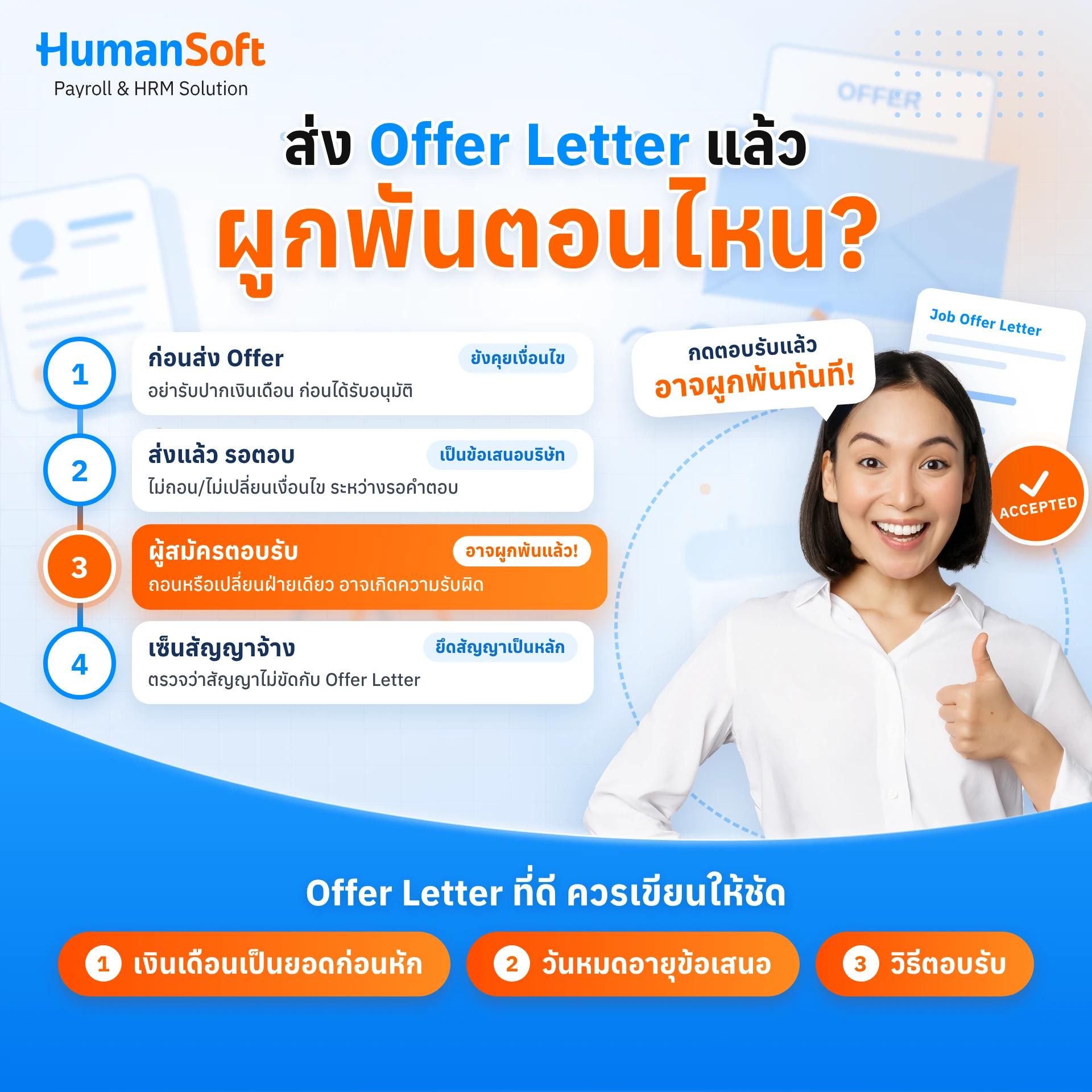
An offer letter may be binding depending on its content and acceptance, rather than its title. Section 5 of Thailand's Labour Protection Act B.E. 2541 (1998) defines an employment contract as a written or verbal agreement, whether express or implied. Therefore, if an offer letter clearly specifies the work and wages and the candidate accepts, an employment agreement may already exist between the parties, even if a full employment contract has not yet been signed.
Read more: Are Verbal Employment Contracts Legally Binding?
How Should HR Write an Offer Letter to Reduce Disputes?
In addition to the position, salary, and start date, a well-written offer letter should include wording that helps prevent misunderstandings after the candidate accepts.
| What to Include | Why It Matters |
|---|---|
| Salary stated before deductions | Prevents candidates from mistaking the amount for take-home pay. |
| Offer expiration date | Clarifies how long the company will wait for a response and when it can offer the role to another candidate. |
| Pre-employment conditions and consequences of not meeting them | For example, qualification checks or medical examinations. Clearly state that the offer will lapse if these conditions are not met. |
| Probation period and assessment method | Reduces disputes if the employee does not pass probation. |
| Details to be included in the employment contract | Explain that other terms are governed by the employment contract and work rules. |
| Authorized signatory | Reassures candidates that the offer has been properly approved. |
| Acceptance method | Specify whether acceptance requires a signed copy, an email reply, or an electronic signature. |
If you specify a probation period, understand the employer's rights during a 119-day probation period before drafting the terms.
Sample Offer Letter
This example is a draft for adaptation, rather than a legally prescribed form. Before using it, complete all blank fields and adjust the terms to match the actual employment offer.
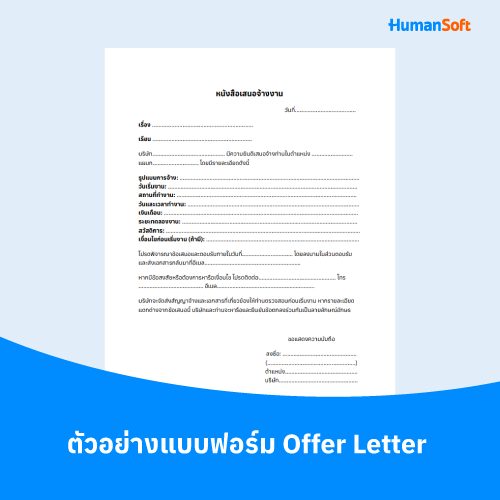
>> Download the English Offer Letter Template
>> Download the Thai Offer Letter Template
How Should HR Respond When a Candidate Negotiates After Receiving an Offer Letter?
Candidates may negotiate before accepting. HR should listen and respond within the relevant timeframe, rather than leaving the original offer unresolved.
- Clarify what the candidate wants to change, such as salary, start date, or benefits.
- Check the budget and salary structure for the position before responding.
- If changes are approved, issue a revised offer letter rather than agreeing to them only verbally.
- If changes are not possible, briefly explain why and reaffirm the original offer and acceptance deadline.
For further guidance, see Salary Negotiation Tips for HR
What Is a Counteroffer, and How Should HR Handle It?
A counteroffer is an offer made by a candidate's current employer to persuade them to stay, such as a salary increase or promotion, after they announce that they have secured a new job. This may lead a candidate who has already accepted an offer letter to change their mind.
HR can reduce this risk in four ways:
- Ask during the interview why the candidate wants to change jobs. If salary is the only reason, the risk of accepting a counteroffer is higher.
- Stay in touch while waiting for the start date, for example by sharing team information or the first-day schedule.
- Align the start date with the notice period required by the candidate's current employer.
- Keep backup candidates available for critical positions until the selected candidate actually starts work.
What Should HR Do If an Offer Is Withdrawn or a Candidate Does Not Start Work?
In either case, communicate in writing and review the accepted terms before taking action, as an employment agreement may already exist once the candidate has accepted.
When the Company Needs to Withdraw an Offer
- Check whether the candidate has accepted and whether any pre-employment conditions in the offer letter have not been met.
- Notify the candidate as soon as possible, as they may already have resigned from their previous job.
- Consult the legal team before withdrawing an accepted offer if there are no applicable conditions supporting withdrawal.
When a Candidate Accepts but Does Not Start Work
- Contact the candidate 1–3 days before the start date to confirm their plans and identify any issues in advance.
- If the candidate cancels, request confirmation by email or message and retain it with the offer letter.
- Contact backup candidates immediately and record the reason to improve future recruitment processes.
What Should HR Do After a Candidate Accepts?
After receiving the accepted offer letter, HR should prepare the new employee to start work through a process known as Onboarding
- Send an email confirming the reporting date and required documents.
- Keep the accepted offer letter and revision history in the employee's file.
- Prepare an employment contract that matches the offer letter. See these essential employment contract templates for HR
- Notify the hiring manager and relevant departments to prepare equipment and user accounts.
- Enter the position, salary, work shift, and benefits into the payroll system in line with the agreed terms.
To reduce paperwork at this stage, HumanSoft's recruitment and onboarding system helps track candidate status and organize the new employee's transition into work.
Summary: What Is an Offer Letter, and What Should HR Watch Out For?
An offer letter is a written employment offer sent to a candidate after selection and before an employment contract is signed. Once accepted, its terms may bind both parties. HR should therefore clearly specify the gross salary, offer expiration date, and pre-employment conditions from the outset. When a candidate negotiates, receives a counteroffer, or changes their mind, respond in writing and keep a record of every exchange.
FAQ: Frequently Asked Questions About Offer Letters
Q: How does an offer letter differ from an employment contract?
A: An offer letter presents the key terms for a candidate to consider, such as the position, salary, and start date. An employment contract sets out duties, rights, and working terms in greater detail. The terms in both documents should be consistent.
Q: Can a company withdraw an offer letter?
A: Withdrawal is easier before the candidate accepts. However, if an acceptance deadline is specified, the offer should not be withdrawn before that deadline. Withdrawing an accepted offer may give rise to liability, so consult the legal team first.
Q: How long does a candidate have to accept an offer letter?
A: This depends on the deadline specified by the company. There is no single timeframe suitable for every position. Allow enough time for consideration and clearly state when the offer expires.
Q: Does accepting an offer letter by email count as acceptance?
A: It can, if the offer letter states that an email reply is an accepted method. The letter should therefore clearly explain how to accept.
Q: What is a counteroffer?
A: A counteroffer is an offer made by a candidate's current employer to persuade them to stay, such as a salary increase or promotion, after they announce that they have secured a new job.
Q: Can an English offer letter be used for Thai employees?
A: Yes, provided the candidate understands English. If two language versions are issued, check that they convey the same meaning and specify which version prevails if there is a discrepancy.
Read More Related Articles
- Essential Employment Contract Templates for HR: All Types in One Place
- Download Free Employment Contract Templates in Thai and English
- How to Write an Appointment Letter, with Practical Examples
- Free HR Recruitment Document Templates: Which Forms Do You Need?
- Recruitment Strategies for HRM in Modern Organizations