
Q: How Many Overtime Hours Can Employees Work per Week Under Thai Labour Law?
Under Section 24 of the Labour Protection Act, employers may require employees to work no more than 36 hours of overtime per week. Employee consent must be obtained each time, and overtime must be paid at the legally prescribed rate. Violations may result in imprisonment, a fine, or both. This article summarizes the conditions, pay rates, and penalties employers need to know.
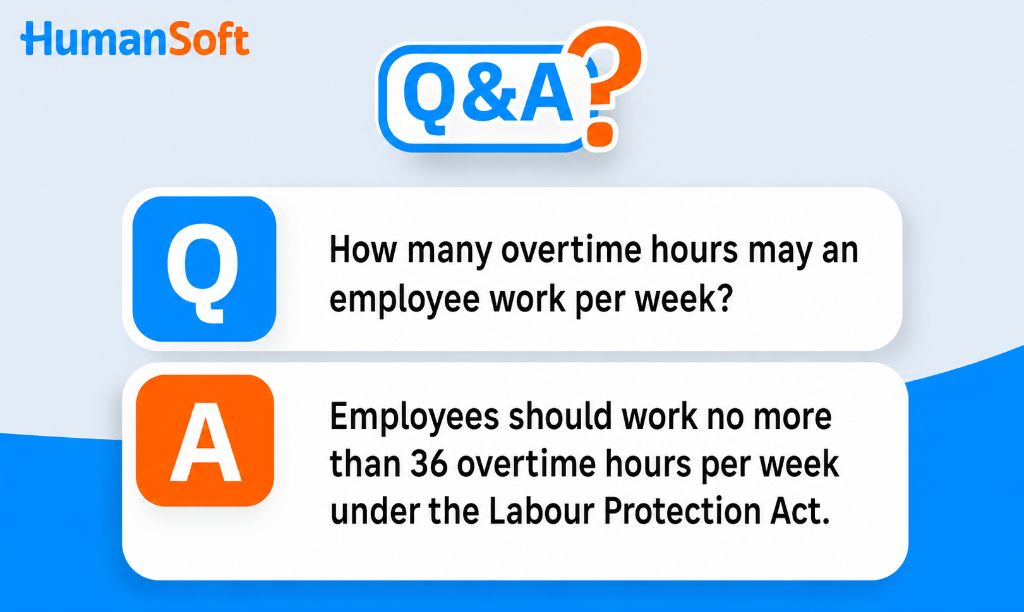
A: Employees Should Work No More Than 36 Overtime Hours per Week Under the Labour Protection Act
Employees should work no more than 36 overtime hours per week under the Labour Protection Act B.E. 2541 (1998).Under the Labour Protection Act , employers are generally prohibited from requiring employees to work overtime, on holidays, or overtime on holidays, except where necessary, such as:
- Employees may work overtime with their consent on each occasion.
- Employees may work overtime or on holidays when necessary if the work must continue without interruption, stopping would cause damage, or the work is urgent.
- Employees in hotels, entertainment venues, transport services, restaurants, beverage shops, clubs, associations, and medical establishments may be required to work on holidays without prior consent.
The Labour Protection Act also prohibits employers from requiring employees to work overtime, on holidays, and overtime on holidays for more than a combined total of 36 hours per week.
Employers must also pay overtime compensation at the rates prescribed by law:
- For overtime on a normal working day, the employer must pay at least 1.5 times the hourly wage, or at least 1.5 times the wage per unit for piece-rate employees.
- For work during normal hours on a holiday or public holiday, the employer must pay at least 1 times the hourly wage for employees entitled to holiday pay, or at least 2 times the wage per unit for employees not entitled to holiday pay.
- For overtime on a holiday or public holiday, the employer must pay at least 3 times the hourly wage, or at least 3 times the wage per unit for piece-rate employees.
Tips! Read more >> What Are Overtime Pay and Holiday Pay, and How Are They Compensated?
Q: Is It Illegal for an Employer to Require More Than 36 Overtime Hours per Week?
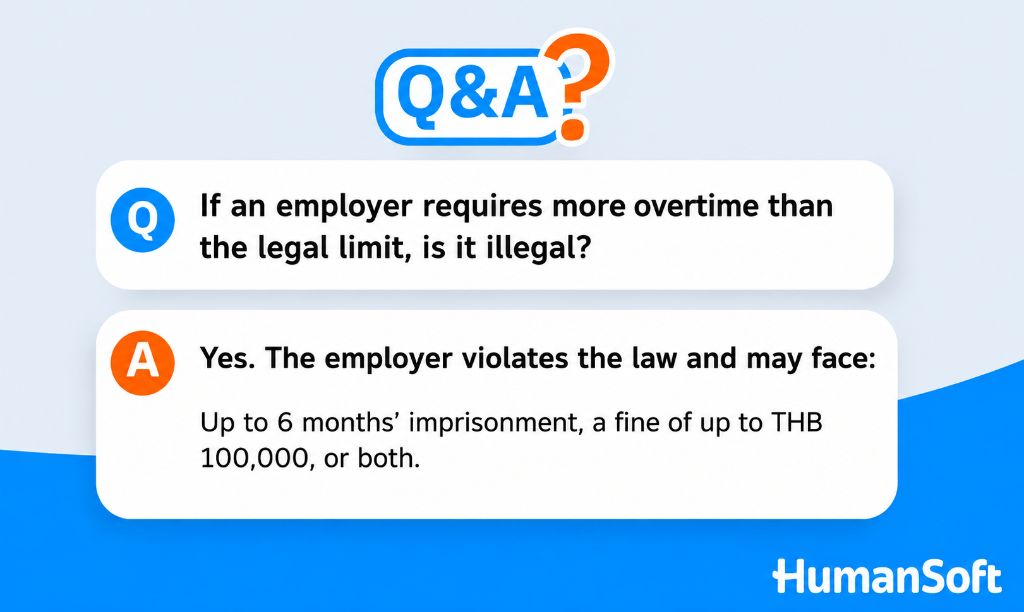
A: Yes. Requiring employees to work more than 36 overtime hours per week violates labour law.
Employers who violate this rule may be subject to the following legal penalties:
An employer who fails to comply may face imprisonment for up to 6 months, a fine of up to THB 100,000, or both.
In addition to the hour limit, employers must also .
Summary: How Many Overtime Hours Should Employees Work per Week?
In summary, the Labour Protection Act generally prohibits employers from requiring overtime unless the employer and employee agree, the work is necessary to prevent damage, or the business provides certain services. In all permitted cases, overtime must be paid at the legally prescribed rate. Total overtime must not exceed 36 hours per week. Employers who fail to comply may face legal penalties.
FAQ: Frequently Asked Questions About Weekly Overtime
Q: What is the maximum number of overtime hours per week?
Q: Can an employer force an employee to work overtime?
Q: Which occupations are subject to exceptions regarding overtime hours?
Q: What are the penalties for exceeding 36 overtime hours per week?
Q: Is holiday overtime included in the 36-hour weekly limit?
Read More Related Articles